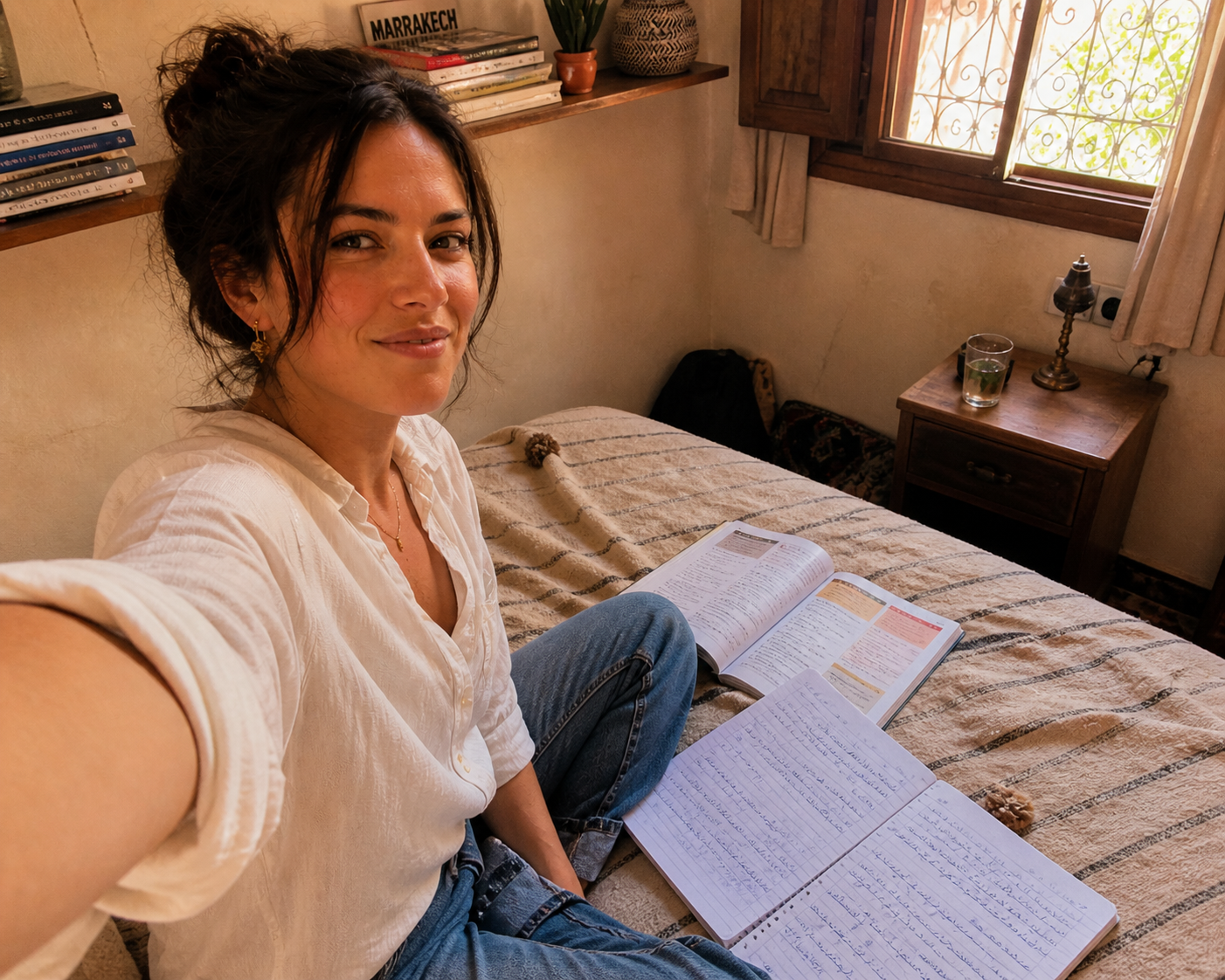
I have been studying Darija for seven months.
Darija is Moroccan Arabic — which is to say, it is Arabic the way a Moroccan would make it, which means it has absorbed pieces of Amazigh, French, and Spanish along the way and emerged as something entirely its own. Linguists find this fascinating. Students find it humbling.
My teacher is a man named Youssef who has the particular patience of someone who has taught many foreigners and long since stopped being surprised by what we get wrong. He corrects me without making me feel corrected, which is a skill I am still trying to understand.
The victories are small but real. Last week I bought tomatoes in the souk and conducted the entire transaction in Darija. The vendor responded at full speed and I understood about sixty percent of it, which I am choosing to count as a win. He also gave me an extra tomato — either a gesture of goodwill or pity. I took it either way.
The most surprising thing about learning the language is what it does to my relationships here. Something shifts when people realize you are genuinely in it for the long term. Nadia speaks to me differently than she did six months ago. The bread vendor near my apartment saves me the good loaves before they sell out. Small things. They do not feel small.
Youssef told me last week that my accent is improving. I asked if he was telling the truth. He smiled and said my tomato vendor clearly thought so.
I will take it.